Kai Peters · 28 September 2026
Businesses Shift Onsite Solar Strategies as Supply Chain Pressures Spur Battery Add-ons and Floating Platform Trials
Supply chain bottlenecks have reshaped how corporations approach onsite solar deployments since late 2024, and data from industry trackers show delayed panel shipments pushing project timelines back by four to nine months in multiple regions. Companies now explore battery integration as a direct workaround while testing floating platform designs on available water bodies to bypass some land and material constraints. According to reports from the National Renewable Energy Laboratory, these adaptations have accelerated in manufacturing-heavy sectors where energy reliability ranks as a top operational priority.
Supply Disruptions Reshape Project Planning
Global shortages of inverters and mounting hardware persisted into 2025, and analysts at the International Renewable Energy Agency documented a 17 percent rise in average lead times for utility-scale components compared with 2023 levels. Corporate developers responded by redesigning layouts around available battery systems rather than waiting for full panel deliveries, while several European and North American firms initiated pilot programs that pair existing solar arrays with modular storage units. Those who've studied this shift note that battery pairings allow facilities to maintain output during peak demand even when panel shipments lag, and the approach reduces reliance on single-source suppliers from Asia.
Battery Integration Emerges as Standard Workaround
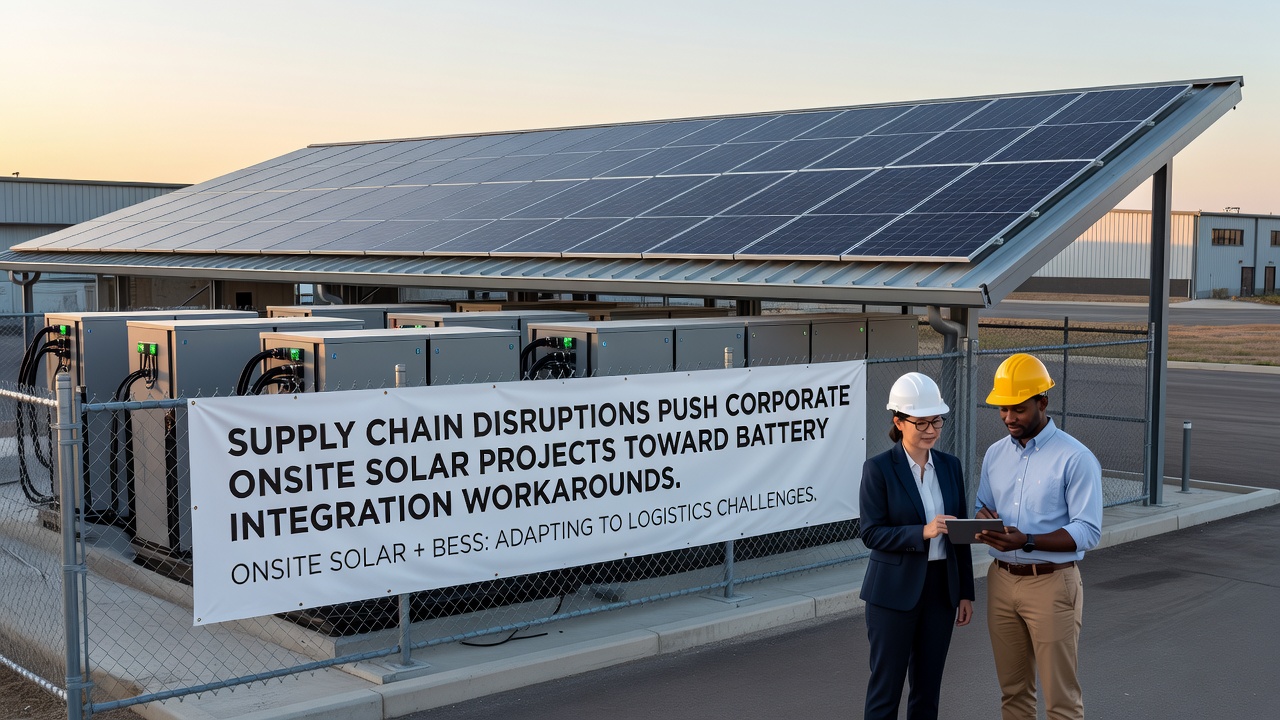
Facilities facing inverter delays began installing lithium-iron-phosphate packs sized to match partial solar arrays, and this tactic lets operators capture daytime generation for evening use without completing the full rooftop or ground-mount installation. Research from the Australian Renewable Energy Agency indicates that such hybrid setups now appear in 28 percent of new corporate solar filings submitted in the first half of 2026, up from 9 percent two years earlier. One manufacturing plant in the Midwest completed a 4-megawatt solar array paired with 3-megawatt-hour batteries ahead of schedule after substituting delayed bifacial panels with higher-efficiency units already in inventory, and similar examples appear across automotive and data-center operators.
Engineers report that these battery additions also smooth grid interconnection approvals in regions with strict export limits, while software platforms now optimize charge-discharge cycles to align with time-of-use tariffs. Yet the strategy requires careful thermal management and updated safety protocols, and insurers have adjusted coverage terms to reflect the added equipment density on rooftops and parking structures.
Floating Platform Experiments Gain Traction
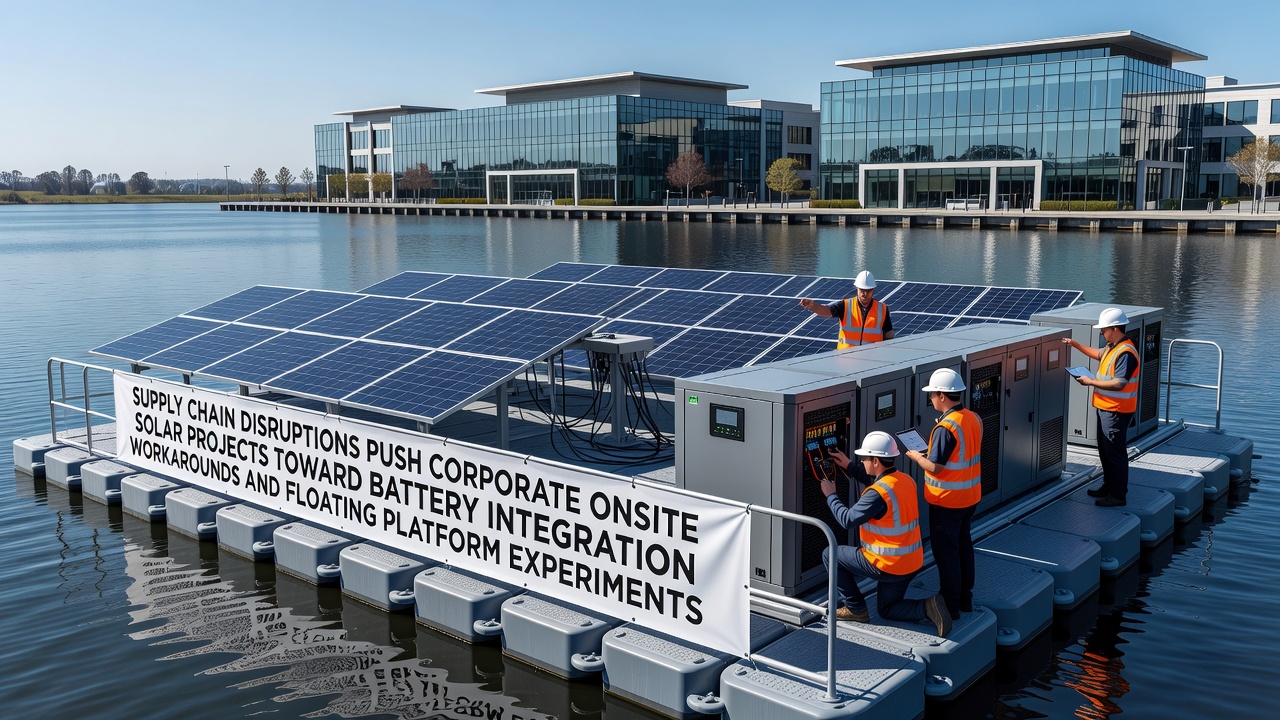
Land scarcity around industrial sites has driven interest in floating solar arrays on reservoirs and wastewater basins, and several corporations launched trials during the summer of 2026 to test structural stability under variable wind loads. A beverage producer in Germany completed a 1.2-megawatt floating system on an on-site retention pond in September 2026, and initial performance data showed a 4 percent yield increase from natural cooling effects compared with adjacent land-mounted arrays. Observers note that these platforms use high-density polyethylene pontoons and corrosion-resistant cabling, which reduces exposure to some supply-chain pinch points that affect traditional steel racking.
Design teams continue to refine anchoring systems for seismic zones and high-precipitation areas, and academic studies from Canadian universities have modeled wave-induced stresses on modular float designs. Early results suggest that floating configurations can cut permitting timelines in jurisdictions where ground disturbance triggers additional environmental reviews, while the technology also opens previously unusable water surfaces for energy generation. Industry groups tracking these deployments report that costs for floating hardware have declined 12 percent year-over-year as production volumes rise in Southeast Asia and Europe.
Regional Patterns and Data Trends
North American corporations lead in battery-paired solar filings, whereas Asian manufacturers have focused more on floating trials near coastal facilities with limited land banks. Figures released by the U.S. Energy Information Administration reveal that onsite solar capacity additions with co-located storage grew 34 percent in the second quarter of 2026, and similar growth appears in Australian mining operations that combine floating arrays with existing tailings ponds. Those monitoring supply metrics observe that silicon wafer availability improved modestly by mid-2026, yet transformer and switchgear backlogs remain the dominant constraint for many projects.
Project developers increasingly source components from multiple continents to hedge against future disruptions, and contracts now include penalty clauses tied to delivery windows rather than fixed dates. This contractual evolution has encouraged greater use of standardized battery enclosures that integrate with various inverter brands, and software interoperability standards continue to advance through industry working groups.
Conclusion
Corporate onsite solar continues to evolve under persistent supply constraints, and the combination of battery integration with floating platform tests provides measurable pathways for maintaining project momentum. Data from multiple regions confirm that these adaptations have shortened some deployment cycles while opening new siting options on water surfaces. As component availability fluctuates, the patterns established through 2026 indicate that flexible system architectures will remain central to corporate energy planning.