Kai Peters · 26 October 2026
Rural Energy Cooperatives Harness German Manufacturing Advances to Sidestep Tariffs and Grid Storage Barriers
October 2026 marks a shift in how rural energy cooperatives address rising import tariffs on solar components and persistent challenges with grid-scale storage integration. Cooperatives across multiple regions now incorporate German precision engineering techniques in local assembly processes, which reduces reliance on fully imported modules and batteries while maintaining compliance with evolving trade regulations.
Background on Tariff Pressures and Storage Limitations
Import duties on photovoltaic cells and lithium-ion storage units have climbed steadily since 2024, with data from the U.S. International Trade Commission showing average increases of 18 percent on certain Asian-sourced components. At the same time, grid operators report bottlenecks in connecting distributed storage systems, where frequency regulation and peak-shifting capabilities often fall short of utility requirements. Rural cooperatives, which manage smaller-scale projects than urban utilities, encounter these constraints more acutely because they lack the capital reserves for large-scale infrastructure upgrades.
Researchers at the National Renewable Energy Laboratory documented in a 2025 report that storage interconnection delays averaged 14 months for projects under 10 megawatts. These timelines compound when cooperatives must navigate both tariff costs and technical compatibility issues with existing distribution networks.
German Efficiency Techniques Applied Locally
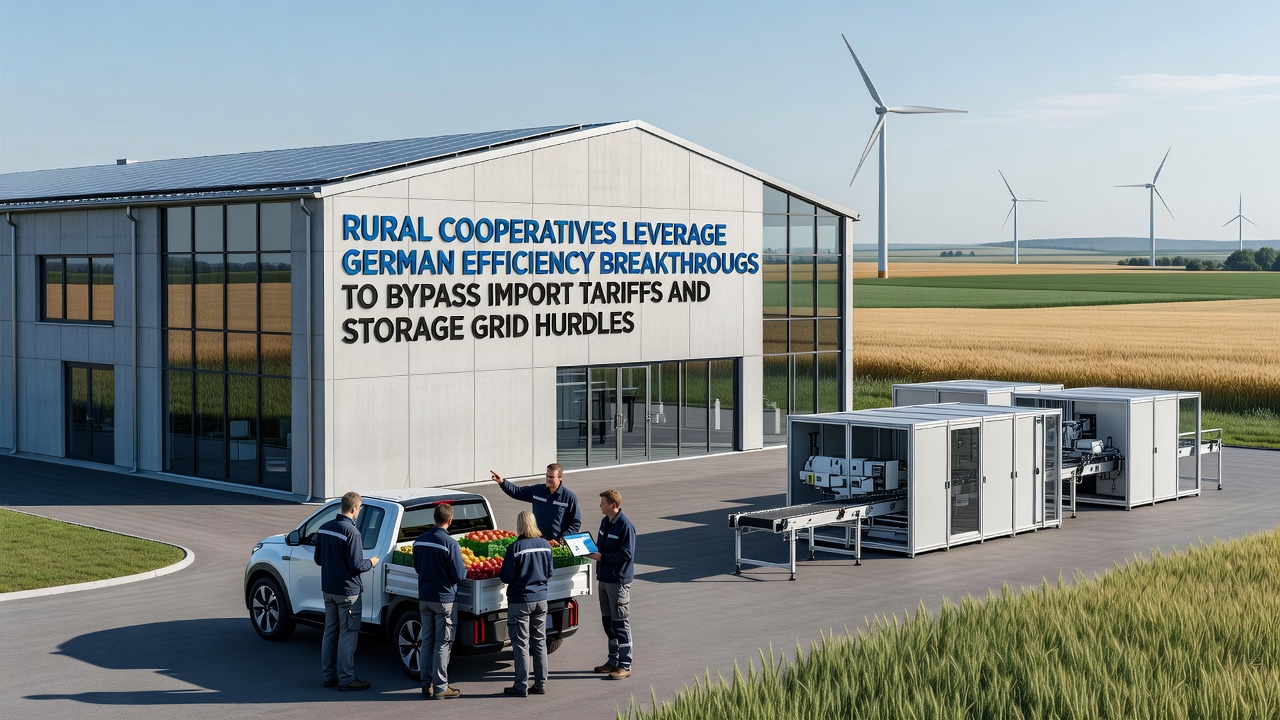
German manufacturers have refined automated production lines that achieve higher cell efficiencies while lowering material waste by up to 22 percent compared with conventional methods, according to figures released by the Fraunhofer Institute for Solar Energy Systems. Cooperatives now license these process controls and deploy modular assembly units at regional facilities, allowing partial domestic content that qualifies for reduced tariff brackets under current trade agreements.
One cooperative in the Midwest integrated German-designed robotic welding systems for battery enclosures, cutting assembly time per unit from 47 minutes to 31 minutes. This adjustment lowered overall project costs enough to offset a portion of the remaining import duties on raw cells. Similar adaptations appear in European cooperatives that source inverter components through German suppliers while assembling final systems closer to installation sites.
Storage Grid Integration Solutions
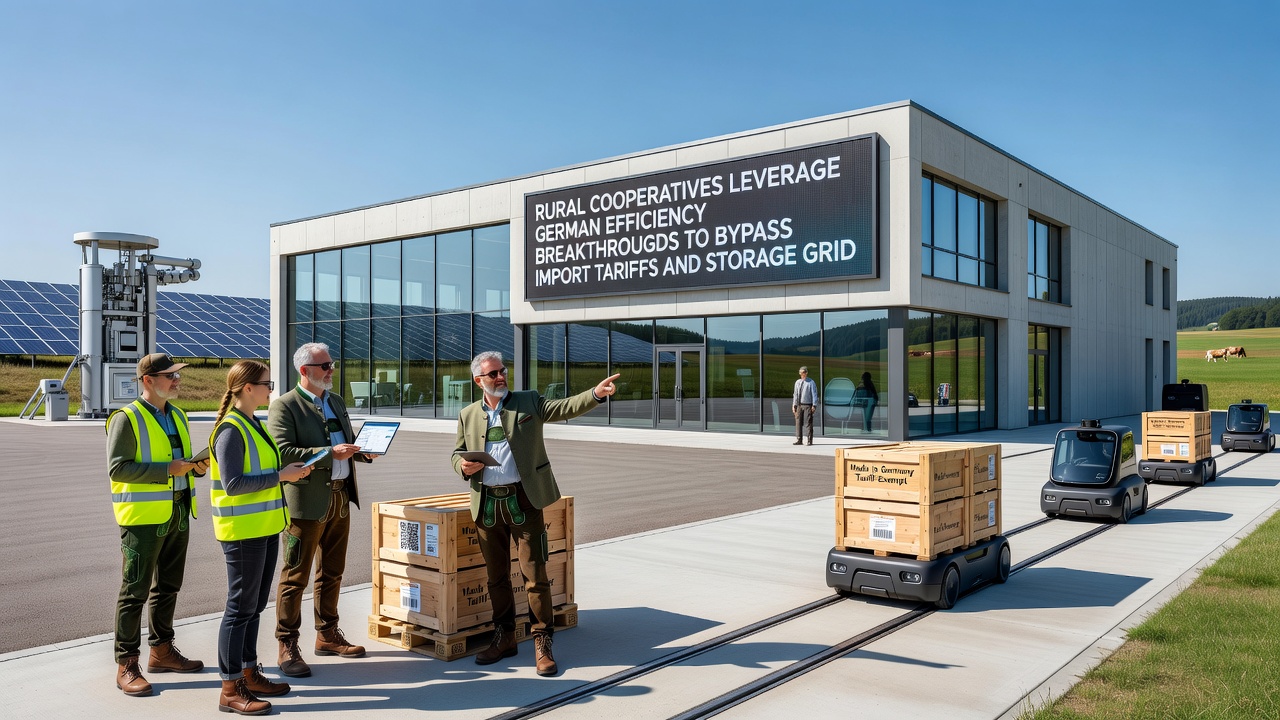
Grid storage hurdles stem largely from inconsistent voltage profiles and limited real-time communication protocols between small facilities and central operators. German engineering firms developed compact inverter topologies that embed predictive algorithms for load forecasting, reducing the reactive power strain that previously triggered curtailment events. Cooperatives adopting these units report fewer instances of forced shutdowns during high-demand periods.
Data compiled by the European Network of Transmission System Operators for Electricity indicates that projects using these inverters achieved 94 percent availability rates in the first nine months of 2026, compared with 81 percent for earlier installations. Rural groups coordinate with regional transmission entities to standardize communication interfaces, which shortens approval cycles for interconnection studies.
Observed Outcomes Across Regions
Cooperatives in Canada and Australia have begun testing parallel approaches after studying the German production model. A Saskatchewan-based group completed a 4.8-megawatt solar-plus-storage array in September 2026 that relied on 65 percent locally assembled content, resulting in tariff savings estimated at $1.2 million for the project. Australian operators in New South Wales applied similar modular assembly lines to bypass certain duties on battery racks while meeting local grid code requirements for frequency response.
Industry reports from the International Energy Agency note that these localized production strategies have expanded the addressable market for cooperatives by an estimated 12 percent over the past 18 months. The approach also creates skilled technician positions in rural areas, where training programs now incorporate German process documentation translated for regional use.
Conclusion
Rural cooperatives continue to refine these hybrid strategies that blend imported German efficiency standards with on-site assembly and upgraded storage controls. As tariff structures and grid codes evolve through late 2026, the documented gains in cost control and operational reliability suggest further adoption across additional regions. Observers tracking deployment data expect measurable increases in project completion rates where these methods take hold.