Erik Wolf · 14 September 2026
Rural Solar Developments Reveal Complex Wildlife Impacts Coupled with Energy Storage Obstacles
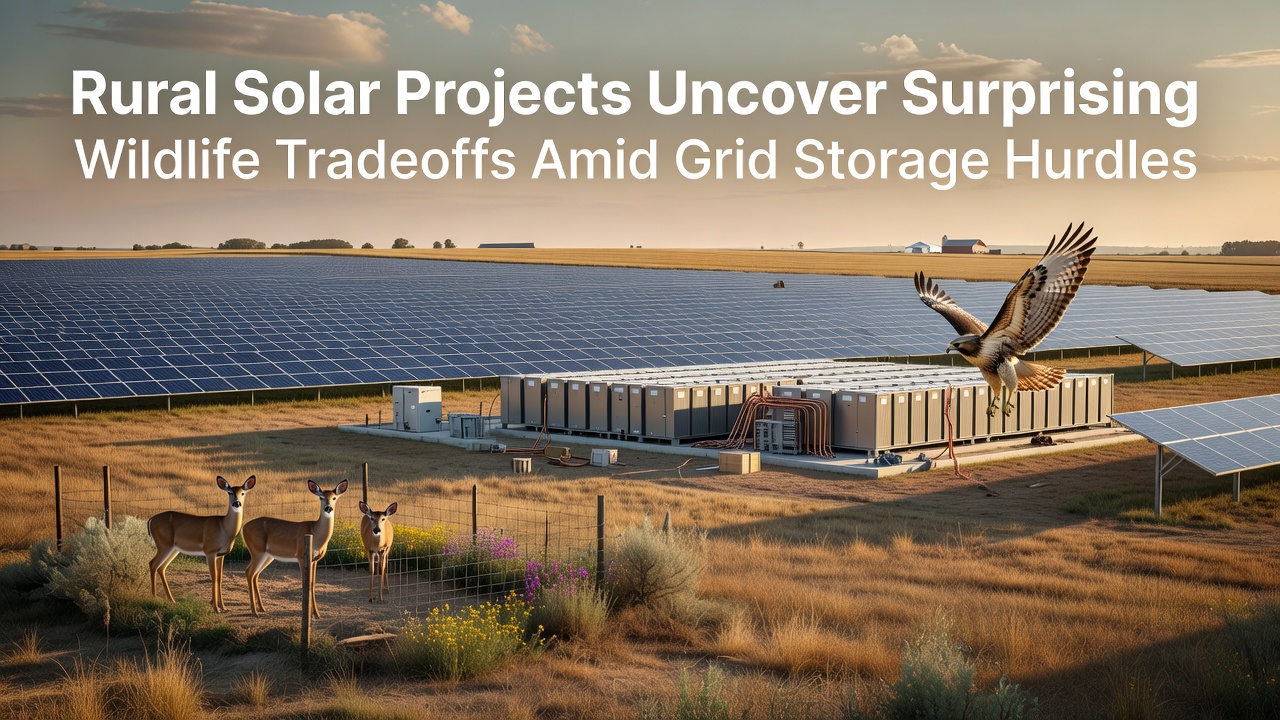
Rural solar projects have expanded across agricultural and open lands in multiple regions since the early 2020s, creating new patterns of land use that intersect directly with existing ecosystems, and data from field studies continue to document both habitat alterations and unexpected benefits for certain species. Observers note that panel arrays often modify ground cover and microclimates, which in turn affect insect populations, small mammals, and bird behaviors in measurable ways. Research conducted through 2025 indicated shifts in vegetation structure under elevated panels, where shade and reduced mowing allow native grasses to persist longer into dry seasons compared with surrounding tilled fields.
Documented Wildlife Interactions
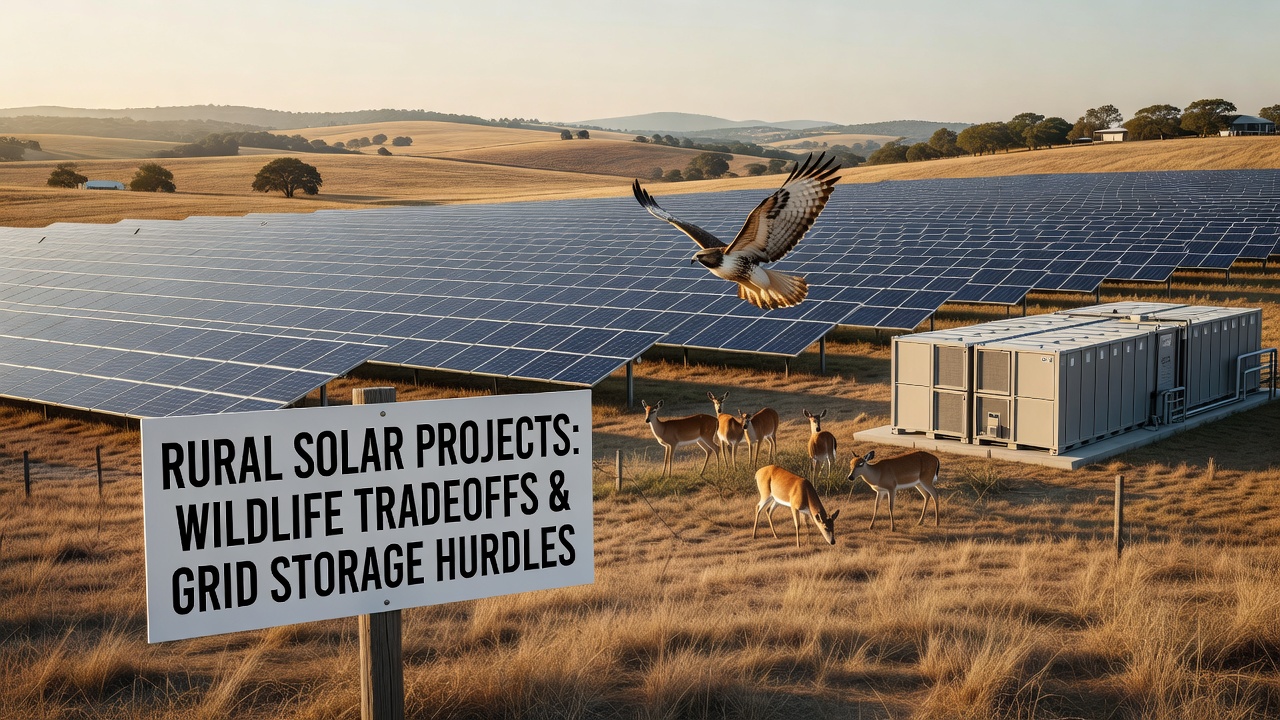
Studies compiled by government agencies and academic teams show that solar sites can support pollinator communities when seeded with appropriate flowering species, while teh same installations sometimes displace ground-nesting birds that require open short-grass areas. One long-term monitoring program in the Midwest tracked increased butterfly diversity on sites managed with low-intensity grazing, whereas raptor collision rates remained low but required ongoing carcass surveys to confirm trends. In September 2026, updated datasets from several states revealed that properly sited projects reduced overall habitat fragmentation when transmission lines followed existing road corridors rather than cutting new paths through intact shrubland.
Tradeoffs appear most clearly when comparing pre- and post-construction surveys: certain bat species avoid lit inverter pads at night, yet the same sites provide roosting opportunities on panel support structures during migration periods. Australian researchers reported similar patterns in semi-arid zones, where kangaroo movement corridors shifted around fenced arrays but recovered once gates were installed at regular intervals. These findings align with observations from Canadian prairie installations, where native plant restoration beneath panels improved soil stability and reduced erosion during heavy rainfall events.
Grid Storage Limitations in Rural Contexts
Despite rapid solar deployment, storage capacity additions have not kept pace in many rural service territories, leading to curtailment during peak production hours and reliance on distant fossil-fuel peaker plants. Battery systems face supply-chain constraints on critical minerals, and land requirements for large-scale installations compete with both agriculture and conservation goals. Figures released by the U.S. Department of Energy in mid-2026 showed that only 38 percent of rural solar capacity had access to four-hour storage within the same substation footprint, creating operational bottlenecks during shoulder seasons when demand patterns diverge from solar output curves.
Transmission upgrades remain the primary bottleneck in sparsely populated areas, where permitting timelines extend several years beyond project construction schedules. European grid operators have tested hybrid solar-plus-storage configurations on former mining lands, achieving higher utilization rates when co-located facilities share interconnection points. Yet cost recovery for these upgrades often falls on ratepayers in low-density counties, prompting debates over equitable cost allocation mechanisms. Data from the International Renewable Energy Agency indicate that rural projects incorporating modular battery units sized at 20-30 percent of peak solar output experience fewer forced outages during extreme weather events.
Integrated Planning Approaches
Project developers increasingly coordinate with wildlife agencies during siting phases, using geospatial tools to avoid migratory corridors and sensitive breeding zones. In one documented case, a utility-scale array in the Pacific Northwest incorporated seasonal fencing adjustments that allowed pronghorn passage during spring and fall migrations, resulting in no measurable population decline over three years of operation. Similar adaptive management strategies appear in reports from South African renewable energy zones, where vegetation management plans balance panel cleaning needs with forage availability for local herbivores.
Storage integration strategies now emphasize distributed rather than centralized batteries in rural settings, reducing the footprint of individual facilities and allowing incremental scaling as solar penetration grows. Community-scale projects in parts of Scandinavia have paired rooftop and ground-mount arrays with behind-the-meter batteries, lowering peak demand charges for agricultural users while maintaining grid stability. These configurations demonstrate measurable reductions in transmission losses compared with long-distance delivery from remote utility-scale plants.
Conclusion
Current evidence indicates that rural solar projects generate measurable wildlife tradeoffs that vary by region, management practices, and species composition, while grid storage deployment continues to face technical, regulatory, and land-use constraints that limit full utilization of generated power. Ongoing monitoring programs and adaptive siting protocols provide pathways for minimizing negative outcomes, and coordinated planning between energy developers and land managers supports continued expansion without irreversible ecosystem disruption. Updated records through September 2026 confirm that projects incorporating both ecological design elements and modular storage achieve higher overall system performance across diverse rural landscapes.